
MOVEMENT ANALYSIS · CARLSBAD, CA
Evolve Biomechanics Lab Your Form, in Focus
Injury, PR goals or persistent pain? Our movement assessment programs track every joint with markerless motion capture, so your physical therapist can identify the root cause of injuries and athletic limitations.
Why the Evolve Biomechanics Lab
AI Movement Analysis
Every joint, every frame. AI motion tracking catches details the eye can’t see.Spot Imbalances
Four angles show faulty movement patterns and gait issues. Unilateral strength tests find muscle imbalances.Come Back Confident
Strength testing and movement scores help your PT decide when you’re ready to return to sport.Track Your Progress
See your hard work pay off. Add an eight-week re-test with markerless motion capture to your analysis.
IN THE LAB
Lab Programs
Whether you’re a trained athlete or recovering from injury, our sport movement analysis programs reveal imbalances the naked eye can’t see.
For runners and walkers
Gait Analysis
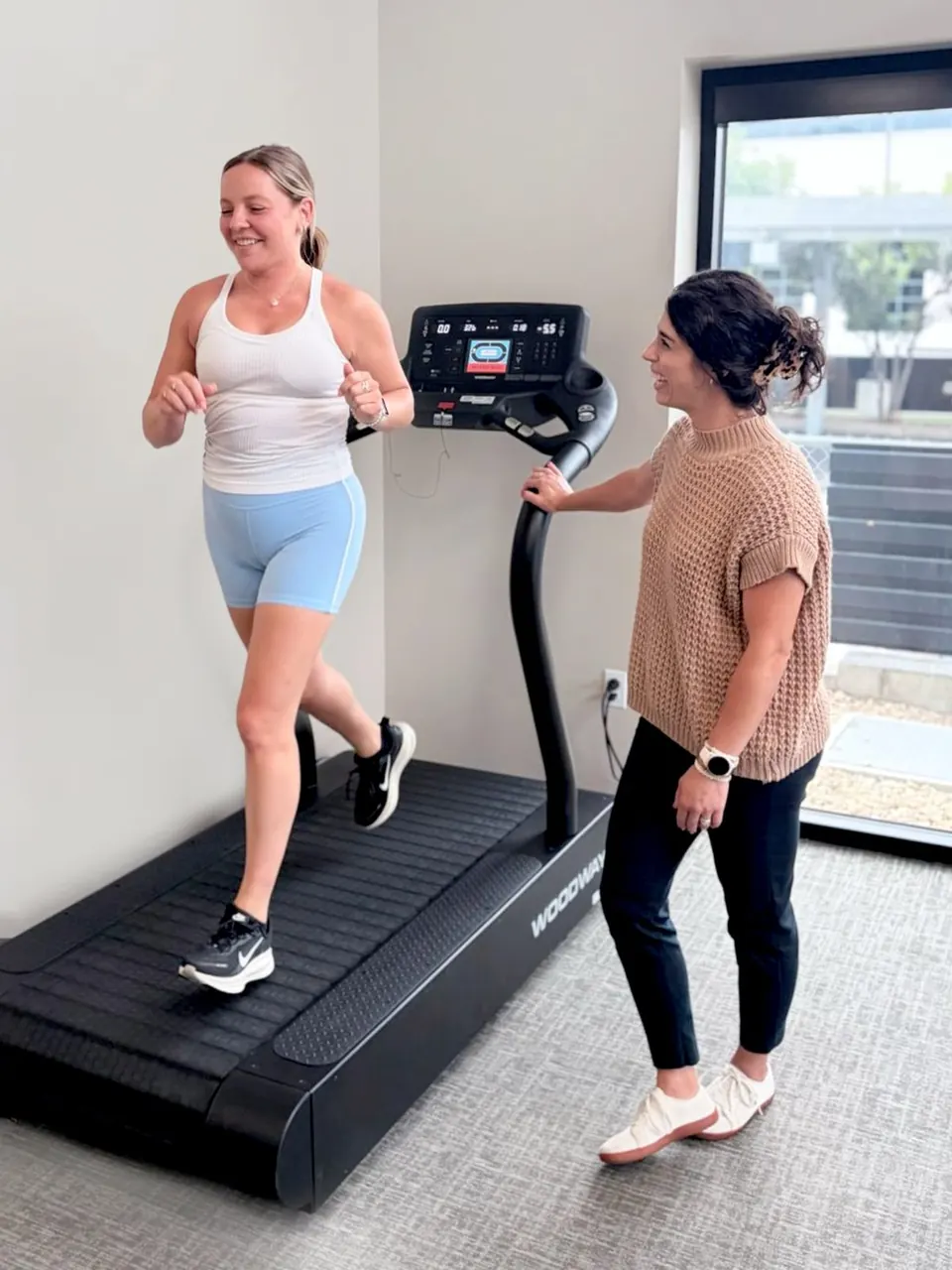
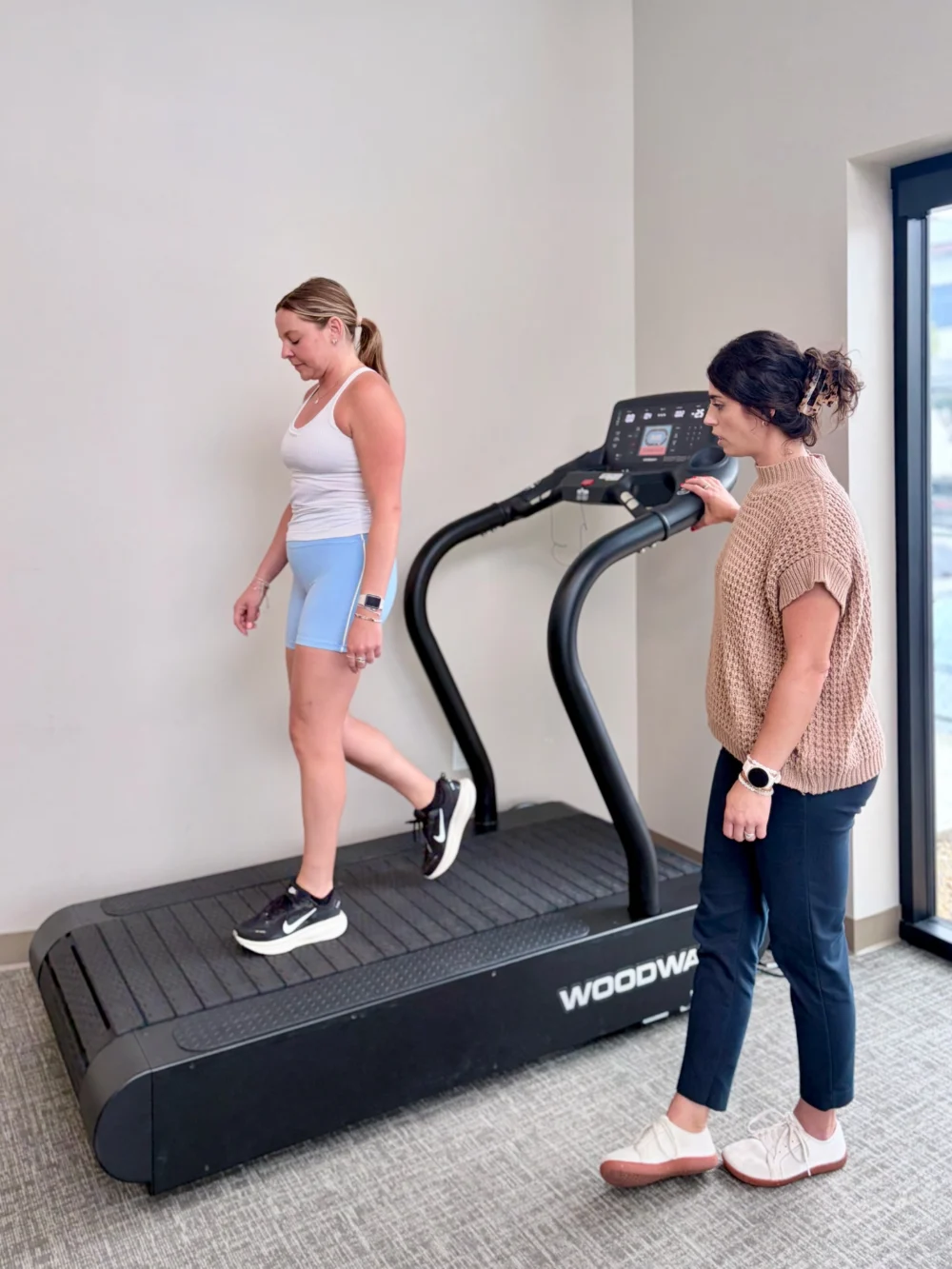
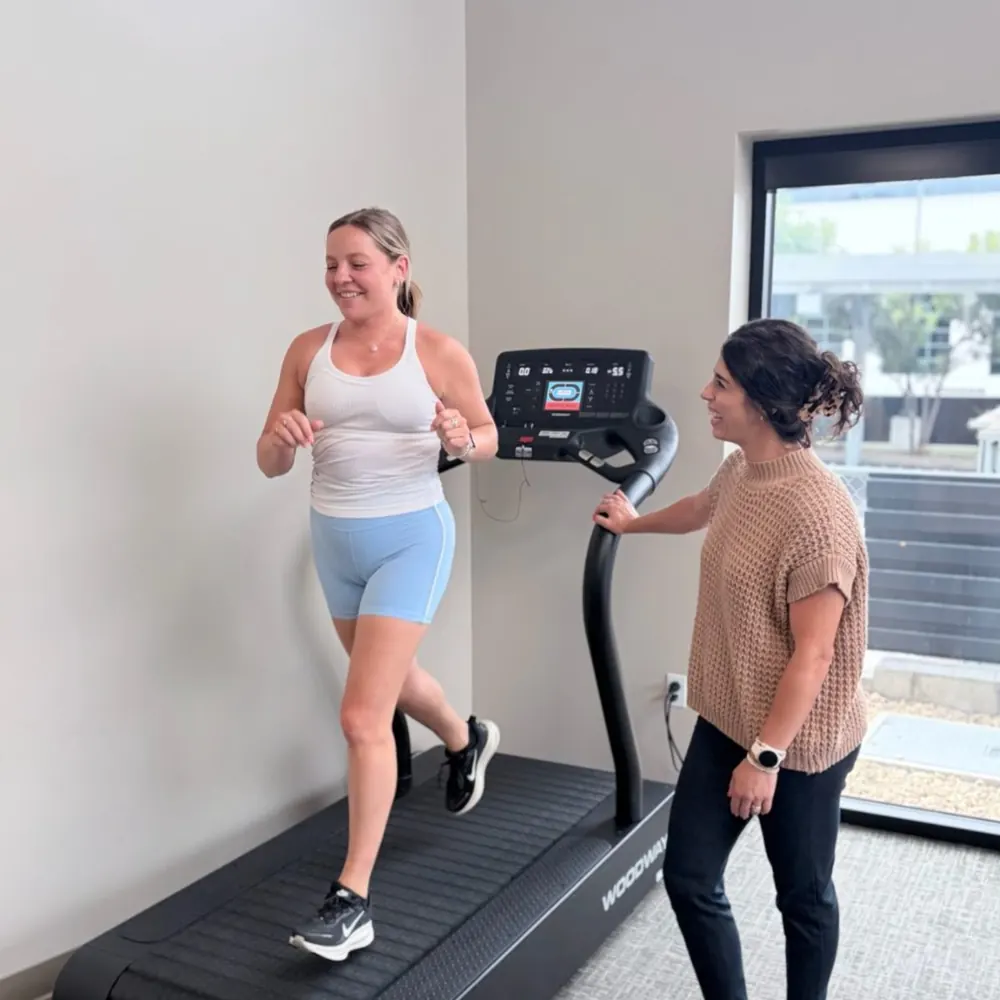
Run or walk on our treadmill as we film from four angles. Runners are scored on up to 12 checks on each leg, from knee valgus to pelvic drop.
Who it’s for
- Runners at every level
- Track athletes
- Walkers
- Hikers
- Back after an injury
- Training for a race
Injuries and conditions
- Runner’s knee
- IT band pain
- Shin splints
- Achilles pain
- Plantar fasciitis
- Hip or low-back pain when you run
- Osteoarthritis
- Bursitis
- Stress fractures
What’s scored*
- Up to 12 checks
- of your stride
- Out of 24
- each side, left and right
- Strength
- screen included
*The score is for runners. Walking analyses get their own report, without a score.
What’s in your report
Sample pages from a runner’s report.
Also in your report
- Stills from your videoFour views of your stride, your angles marked.
- Your PT’s planThe findings, what to work on and the cues to practice.
*Scored for runners. Walking analyses get their own report: every phase of your step against typical ranges, without the 24-point score.
Included with either program
- Your PT goes through your results with you
- A written report and your PT’s plan
- About 60 to 90 minutes, start to finish
For athletes
Return to Sport Testing
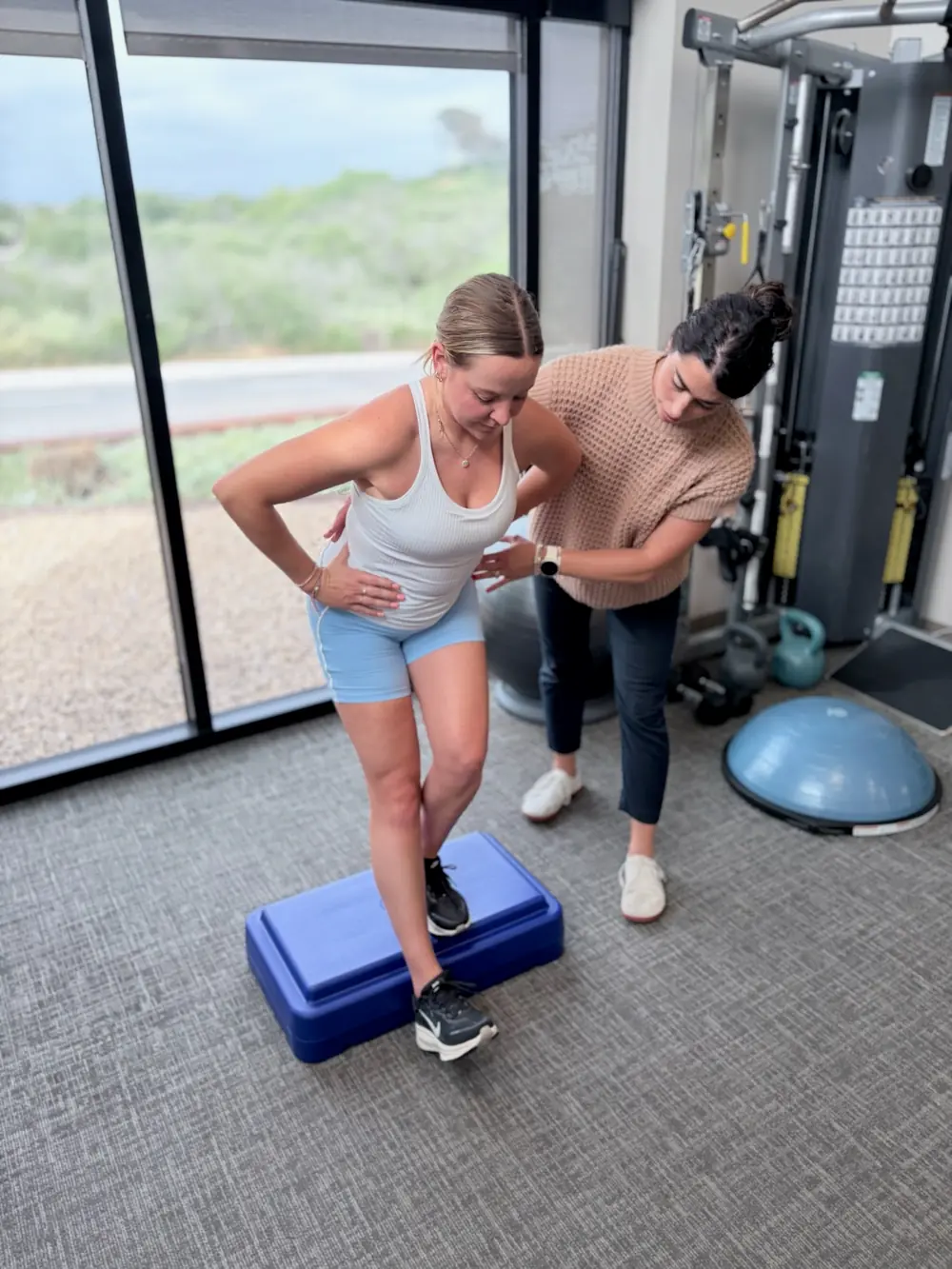
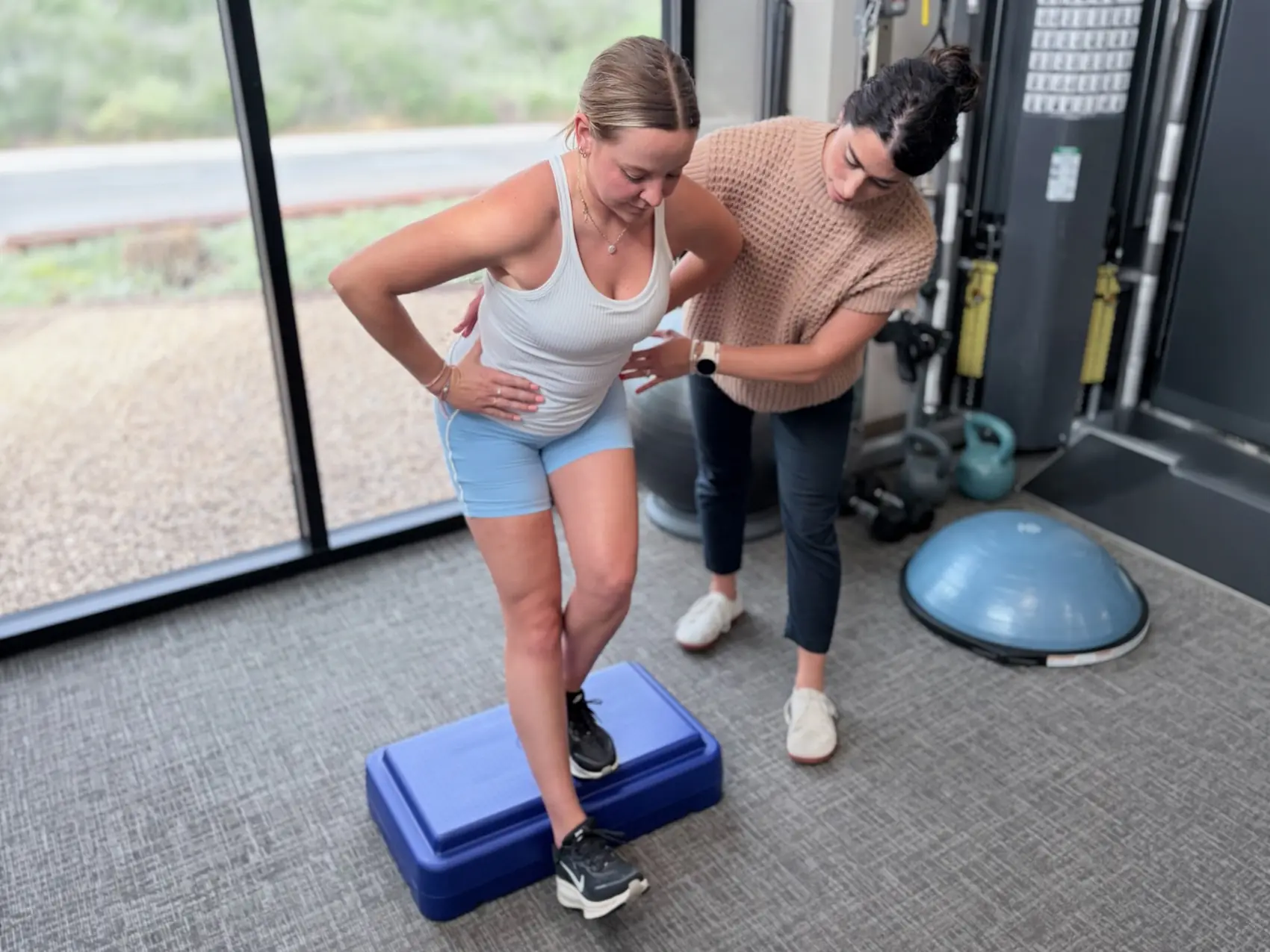
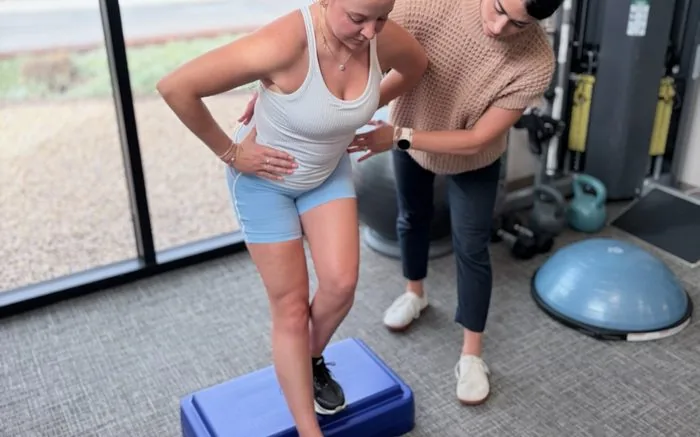
Jump, land and cut while we film six movements. Then we score knee, hip, pelvis and trunk on each leg and test its strength.
Who it’s for
- Post-ACL surgery
- Sports injury recovery
- Preseason prep
- High school athletes
- College and pro athletes
- Recreational athletes
Injuries and conditions
- ACL tears and reconstruction
- Meniscus repair
- Ankle sprains
- Hamstring strains
- Achilles pain
- Knee or hip pain with cutting and landing
What’s scored
- 6 movements
- from a step‑down to a side-step cut
- Out of 50
- across knee, hip, pelvis and trunk
- Strength
- tested on both legs
What’s in your report
Also in your report
- Stills from your videoFour views of every movement, your angles marked.
- Your PT’s planThe findings, what to work on and the cues to practice.
Included with either program
- Your PT goes through your results with you
- A written report and your PT’s plan
- About 60 to 90 minutes, start to finish
Why we measure
The Power of Accuracy
Most of what we measure is small: a few steps a minute, a few degrees at the hip, a few percent of strength. Research shows how much they matter in rehab and in physical therapy for injury prevention.
Return to sport · Re-injury
Nearly 1 in 4
young athletes who return after ACL surgery tear an ACL again.
The risk is 30 to 40 times higher than for their uninjured teammates.
19 studies, meta-analysis · Wiggins, 2016 [1]
Return to sport · Knee control
2.3x
the odds of another ACL injury
for each movement where the knee caved in, out of six filmed before returning to sport.
Female athletes after ACL surgery · Straub and Powers, 2025 [2]
Return to sport · Knee control
Four movement measures on video, taken before female athletes returned to sport after ACL surgery, predicted who would tear an ACL again.
Straub and Powers, 2025 [2]
Return to sport · Testing
6 of 6
strength and hop tests passed is the bar for going back after ACL surgery.
Among 158 professional athletes, those who went back without passing all six re-tore the graft four times as often.
158 professional athletes · Kyritsis, 2016 [3]
Both programs · Strength
In 25 randomized trials on sports injury prevention with 26,610 people, strength training cut injuries by two-thirds.
Balance training cut them by 45%, and stretching by 4%.
26,610 people, 25 trials · Lauersen, 2014 [4]
Return to sport · Hip strategy
4 of 6
movements showed the knee doing the hips’ work in athletes who later re-tore an ACL
versus about 2 of 6 in those who stayed healthy. On video, it was the strongest sign of a second injury.
Female athletes after ACL surgery · Straub and Powers, 2025 [2]
Running · Gait retraining
Less than half as many injuries
In the year after two weeks of gait retraining with live feedback, 16% of runners got hurt, versus 38% who trained without it.
320 new runners, randomized trial · Chan, 2018 [5]
Running · Step rate
20%
less load on the knee with each step
when runners took about 9 extra steps per minute at the same speed.
45 healthy runners · Heiderscheit, 2011 [6]
Running · Knee pain
1.5 points
less kneecap pain than knee exercises alone, with the hips trained too
and 3.3 points less than no training, across 14 trials with 673 people.
673 people, 14 trials · Nascimento, 2018 [7]
Return to sport · Re-injury
15%
of all patients tear an ACL again after surgery, and the other knee is just as likely as the repaired one.
Across 19 studies, 7% re-tore the repaired knee and 8% tore the other one.
19 studies, meta-analysis · Wiggins, 2016 [1]
Return to sport · Testing
4x
the ACL re-tear rate for pros who returned without passing all six strength and hop tests.
Of 158 professional athletes, 1 in 6 re‑tore, about three months after going back on average.
Male professional athletes · Kyritsis, 2016 [3]
Seeing Isn’t Measuring
Skilled clinicians have a keen eye for hip drop, foot pronation and knee valgus. But even the best PTs can’t match the precision of markerless motion capture.
| What we compare |  Evolve Biomechanics Lab | Routine Screening |
|---|---|---|
| Typical miss on a joint angleMarkerless tracking vs trained eyes, each checked against lab motion capture [8] [9] | About 5° | About 15° |
| Images in the 40 ms an ACL takes to tearHigh-speed video at 240 frames a second vs standard video at 30 [10] | About 10 | About 1 |
| Precise joint angles, measured in degrees | Yes | No |
| No markers or sensors required | Yes | Yes |
| Every joint tracked, frame by frame | Yes | No |
| Movement analyzed from four angles | Yes | No |
| Left and right sides measured separately | Yes | No |
| Measurable progress between analyses [11] | Yes | No |
| Slow-motion replay of every step, cut and landing | Yes | No |
| A take-home report with your numbers and charts | Yes | No |
How it works
Your Biomechanical Assessment
- 01
Book Your Analysis
Pick a program and a time. Wear light-colored, snug clothes and non-black shoes.
 Book your analysisSchedule an analysis→
- 02
Move on Camera
Run, jump and cut while we capture your every move from four camera angles, so we don’t miss a single detail.
- 03
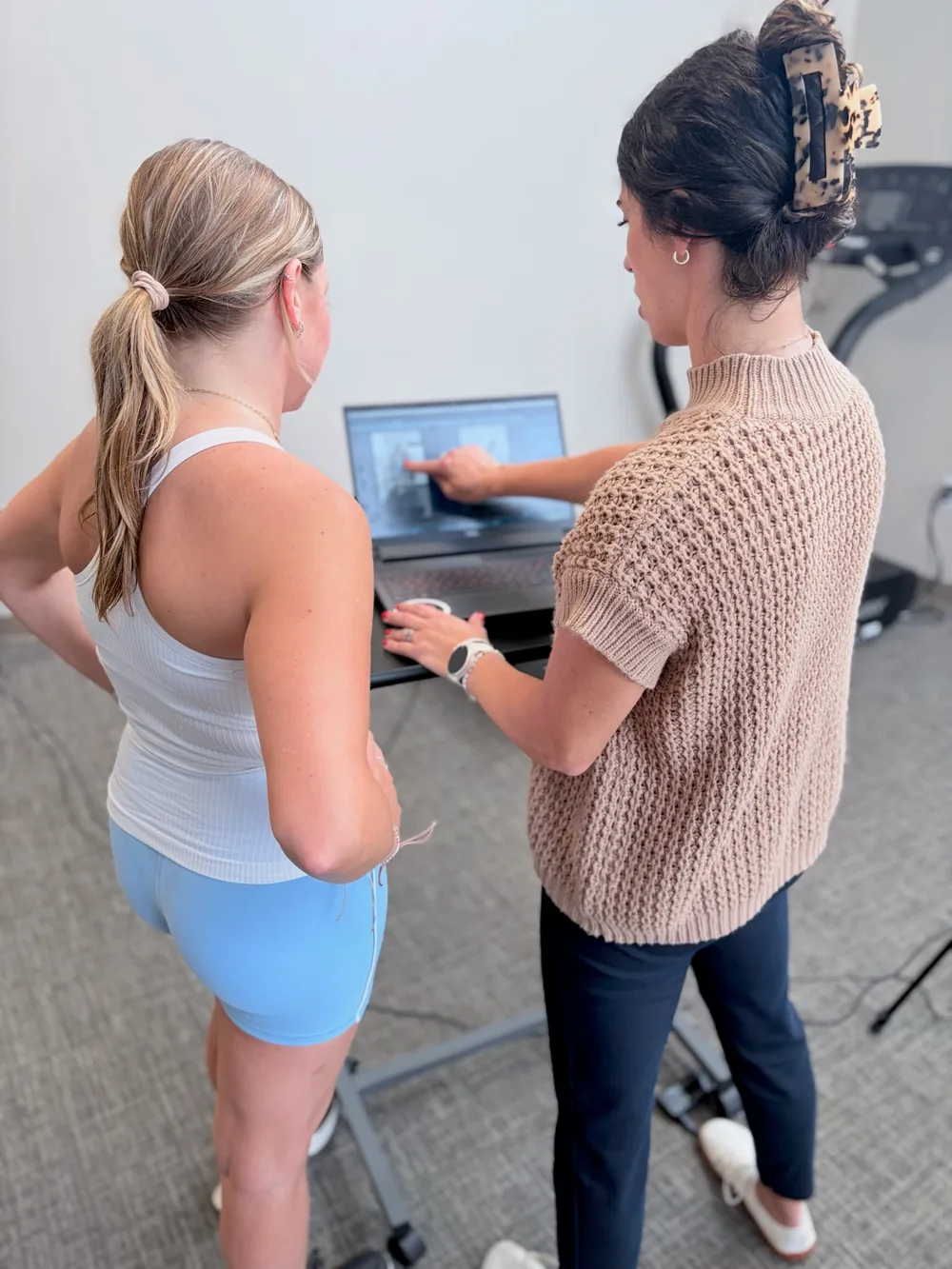
Review with Your PT
Your physical therapist scores each movement using Dr. Powers’ method and shows you the video, frame by frame.
- 04
Get Your Report
We email you a comprehensive report with scores, charts, snapshots and a personalized home exercise program.
What You Leave With
Your written biomechanics report
Your scores, your joint angles and stills from the video, with the numbers behind each one.
Your physical therapist walks you through it
Before you leave, you review your video and your movement patterns together.
Your plan
Your PT’s findings, the corrective exercises in your program and simple cues to practice.
- What your PT found
- What to work on
- Cues to practice
Book a re-test to see your progress
Book it with your analysis as a bundle. At eight weeks, your PT compares the two reports with you.
About
Evolve Biomechanics LabCarlsbad, San Diego CountySee the programs→Inside the Lab
High-speed cameras
See how you move from four different angles, shot at 240 frames per second.Motion tracking software
Markerless motion tracking finds every joint on every frame and measures the angle. No markers to wear.VALD DynaMo
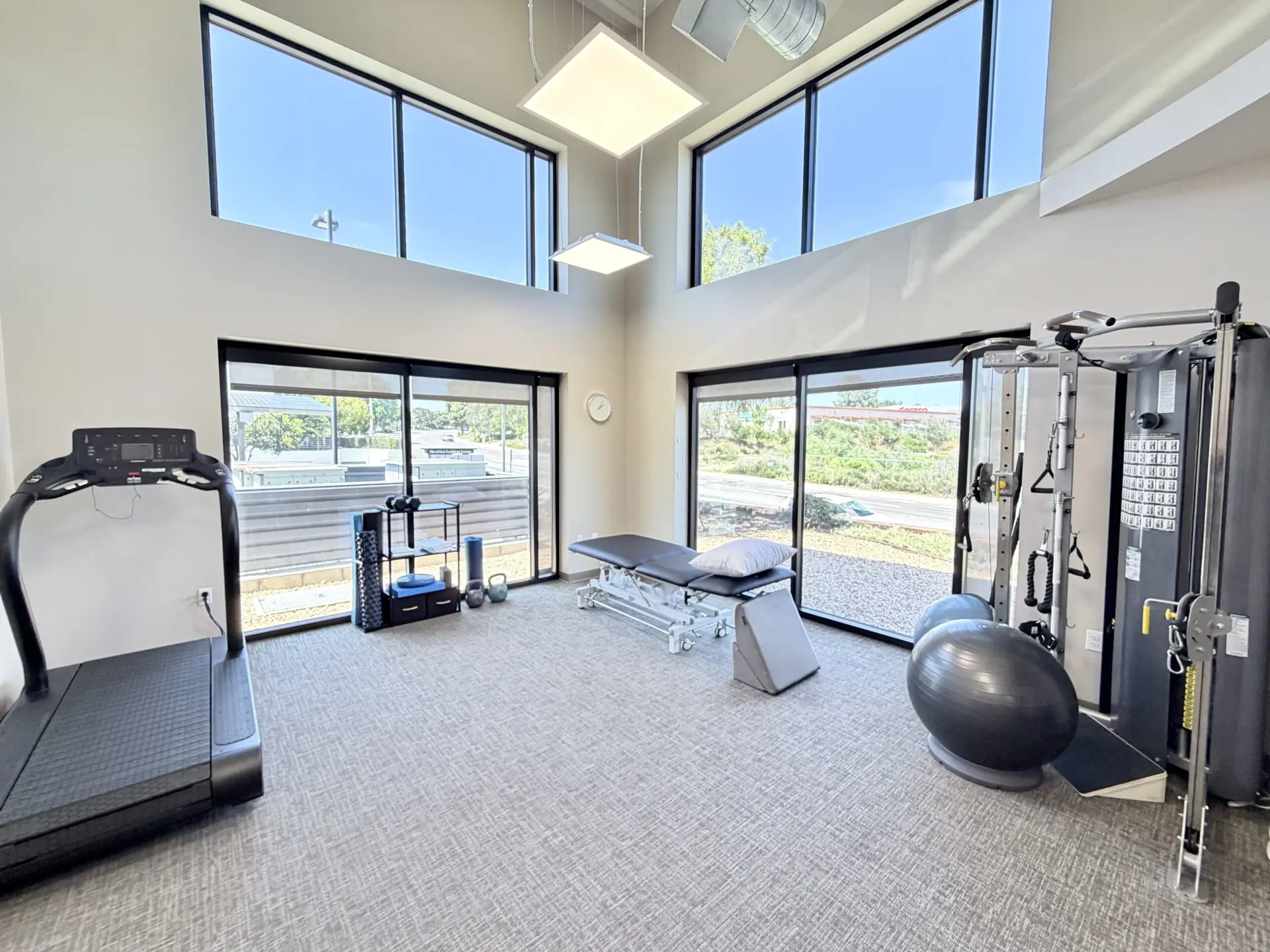
Strength testing with a handheld dynamometer finds muscle imbalances between the two sides of your body.Treadmill & testing floor
Treadmill for runners and walkers. Testing floor for athletes, with room to jump, land and cut.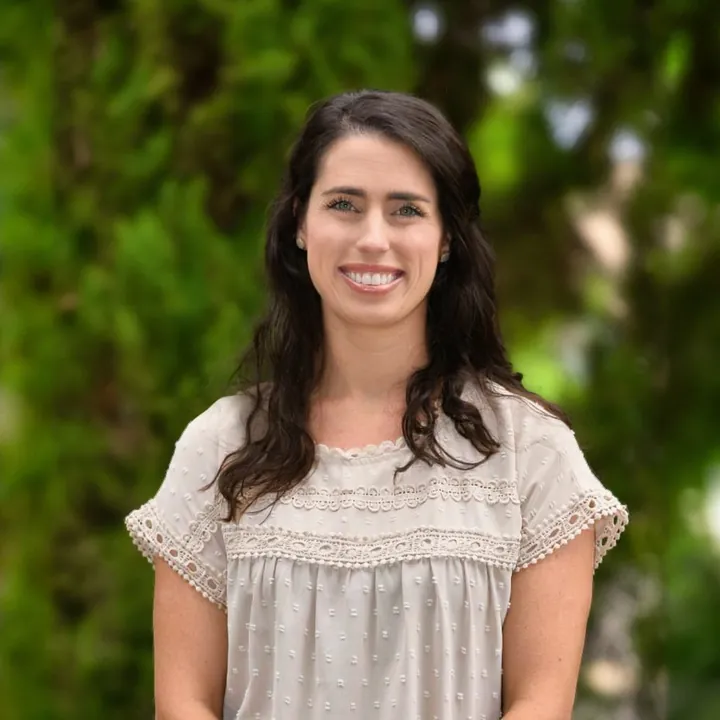 Allie Anady, PT, DPTCo-founder · Leads the Evolve Biomechanics LabRead Allie’s bio→
Meet the Founder
Doctor of Physical Therapy
She earned her bachelor’s in biology at UC San Diego in 2012 and her doctorate at the University of St. Augustine in 2017.Carlsbad born and raised
She joined Gaspar Physical Therapy in 2023 and co-founded Evolve DPT within the Gaspar family.Trained with Dr. Chris Powers
He is the USC professor behind the lab’s scoring. She completed his program at the Movement Performance Institute in 2024.Leads the Biomechanics Lab
She launched the Evolve Biomechanics Lab. Each report ends with her findings and what to work on.FAQ
Quick answers to the most frequently asked questions about the Evolve Biomechanics Lab in Carlsbad, North County San Diego.
What is biomechanics?
Biomechanics is the study of how the body moves. A biomechanical assessment, also called a movement analysis, measures how your joints move when you run or land. In our lab, high-speed cameras film you and software tracks your joints on the video. Your physical therapist reads the numbers with you and turns them into a plan.
What does the AI do?
It finds your joints on the video and tracks them frame by frame, so there are no markers to wear. The software measures the angles, and your physical therapist scores every test personally and decides what it means.
What equipment does the lab use?
Noraxon markerless motion capture with NiNox high-speed cameras, so nothing is strapped to you, a Woodway treadmill, the Powers Running Assessment for runners, and a handheld dynamometer (VALD DynaMo) for strength testing.
Who is Dr. Christopher Powers?
Dr. Christopher Powers, PT, PhD, FACSM, FAPTA, is a USC professor who co-directs the university’s Musculoskeletal Biomechanics Research Laboratory and founded the Movement Performance Institute in the Los Angeles area. Much of his research is on why knees get injured. The running assessment we use is built on his methods, and the physical therapist who leads our lab completed the functional biomechanics course at his institute in 2024.
Do you offer 3D motion analysis?
No. The lab uses 2D markerless motion capture from four camera angles. 3D systems add one thing: rotation in the transverse plane, the twisting motions. The checks in our programs, like trunk lean, hip drop and knee valgus, happen in the other two planes, and in a study from Dr. Powers’ lab, 2D video came within five degrees of 3D for trunk lean and hip drop on average [12]. So we read your results without markers or wearable sensors. 3D is the better tool for big twisting motions, like a golf swing.
Can I book a Gait Analysis if I’m not injured?
Yes. You don’t need an injury to book a Gait Analysis. Runners come in with a PR goal or a race on the calendar, and athletes book Return to Sport Testing before the season to check hip stability and landing. If injury prevention is the goal, your report gives you and your physical therapist the numbers to work from.
Do I need a referral?
No. Direct access physical therapy means you can start without a physician referral. If you have had surgery, your physical therapist will discuss when it is appropriate to start testing, following your post-operative protocol.
How much does movement analysis cost?
A Gait Analysis is $300, and Return to Sport Testing is $350. With the eight-week re-test bundled in, they’re $450 and $500. Every price and the ways to pay are on our services page.
How long does a movement analysis take?
About 60 to 90 minutes, start to finish, for either program. That includes going over your video with your physical therapist before you leave.
What should I wear?
- Wear light-colored, form-fitting clothing whenever possible.
- Wear shoes that contrast with the treadmill or floor surface. Avoid wearing black shoes if you’re coming for a Gait Analysis.
- For trunk analysis of the spine and pelvis, males will be asked to remove their shirts. Females may wear a sports bra or cropped athletic top.
- Tight-fitting shorts are preferred. If clothing is loose, it may be temporarily secured with athletic tape to improve tracking accuracy.
Where is the Evolve Biomechanics Lab located?
The lab is inside Evolve DPT at 6125 Paseo Del Norte, Suite 100, in Carlsbad, North County San Diego. Every Gait Analysis is filmed there. Return to Sport Testing happens at Gaspar Physical Therapy’s Coastal Carlsbad clinic, 6102 Avenida Encinas, Suite E, because our large indoor turf area helps simulate your athletic movement. Book either one through Evolve at (760) 707-5080.
Is this the same as Video Movement Analysis?
Yes. The Evolve Biomechanics Lab is the new name for our Video Movement Analysis program. The same tests and the same team, now with a page of its own.
References
- Second ACL injuries in young athletes who return to sport. Wiggins et al., American Journal of Sports Medicine, 2016
- Movement after ACL surgery and second ACL injuries. Straub and Powers, British Journal of Sports Medicine, 2025
- Return-to-sport tests and ACL graft re-tears in professional athletes. Kyritsis et al., British Journal of Sports Medicine, 2016
- Strength, balance and stretching programs and sports injuries. Lauersen et al., British Journal of Sports Medicine, 2014
- Gait retraining with live feedback and running injuries. Chan et al., American Journal of Sports Medicine, 2018
- Step rate and knee load. Heiderscheit et al., Medicine & Science in Sports & Exercise, 2011
- Hip and knee strengthening for kneecap pain. Nascimento et al., Journal of Orthopaedic & Sports Physical Therapy, 2018
- Markerless motion capture accuracy during jumping. Ogura et al., Journal of Sports Sciences, 2025
- Visual estimates of joint angles by experienced physiotherapists. Kenner et al., BMC Musculoskeletal Disorders, 2026
- When an ACL tears after the foot lands: video analysis of 39 injuries. Krosshaug et al., American Journal of Sports Medicine, 2007
- How small a change 2D running video can pick up. Dingenen et al., Physical Therapy in Sport, 2018
- 2D video against 3D motion capture for trunk and pelvis motion. Straub and Powers, International Journal of Sports Physical Therapy, 2022
Book the lab
Schedule an Analysis
Pick your program below to request an appointment, or call us at (760) 707-5080. No referral needed.
For runners and walkers
For athletes, after injury or before the season